Story-2
Walking with Basho
Oku no Hosomichi (The Narrow Road to the Deep North), a story connecting Tokyo and Yamagata
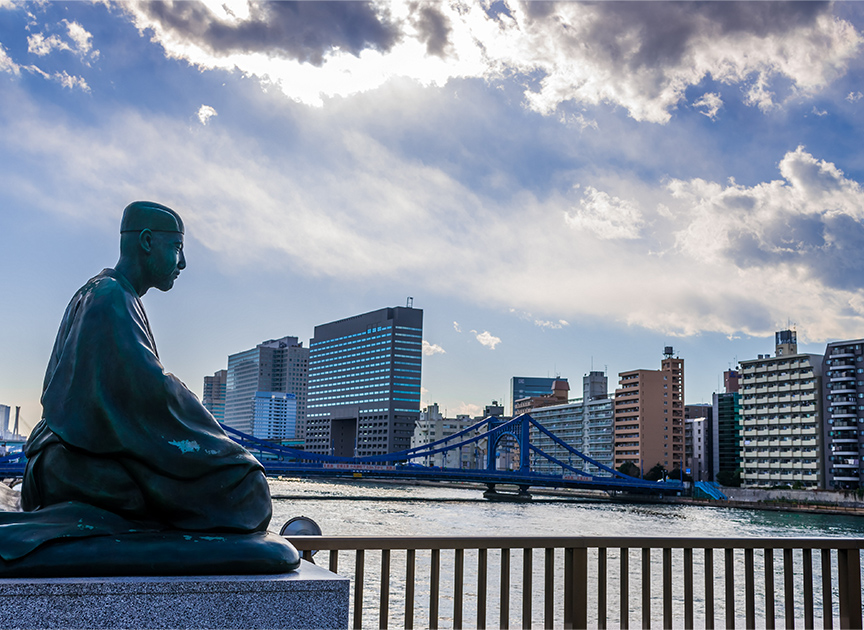
Photo credit by Koto City Tourism Association
Tracing the footsteps of Matsuo Basho along The Narrow Road to the Deep North—we follow his journey on foot in the present day. It becomes a quiet trip, enduring the lingering echoes of scenery and words across time, as we visit sites connected to Basho in both Tokyo and Yamagata, reflecting on his presence and the impressions he left behind.
The journey begins at Tokyo’s Sumida River Terrace, along the riverbank where Basho left Fukagawa and was seen off as he traveled by boat toward Senju. Between the reflections of buildings on the water’s surface, moments arise when verses such as “summer moon” or “spring departs, birds cry, fish eyes filled with tears” suddenly overlap with the scene. From the site of Saitoan, where Basho spent the night before his departure, the stage shifts to Yamagata. At Akakura Onsen, said to be where Basho refreshed himself before tackling the most difficult part of the journey, the Natagiri Pass, visitors can rest their feet in hot waters rising through a misty gorge, and feel the beauty of harmony between people and nature. At the Yamadera Basho Memorial Museum, one can experience the unchanged scenery of his famous verse, “Such stillness the cicadas’ cries sink into the rocks.” The starting point of the Mogami River boat ride is the place where Basho himself boarded. As the river roars through steep mountain valleys, feel the immediacy of his line: “gathering the early summer rains—swift flows the Mogami River.”
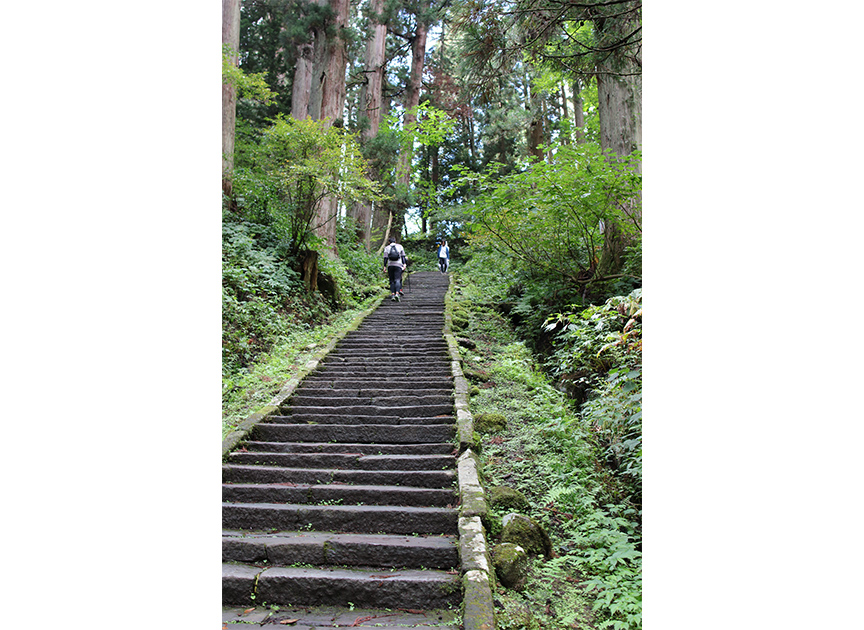
Disembarking from the boat, the final stage of the journey leads to the Shonai region. Through the approach of Mt. Haguro in Tsuruoka, each step up the stone stairway through towering cedars brings a sense of clarity. At Hiyoriyama Park in Sakata, a hilltop that retains traces of its prosperity as a port town, Basho wrote before the setting sun sinking into the Sea of Japan: “a hot sun sets into the sea, by the Mogami River.” And at the journey’s end lies the Juroku Rakan Iwa in Yuza, where sixteen rakan rock statues line the rocks facing the Sea of Japan, standing silently against wind and waves to greet travelers. Step by step, word by word, walking The Narrow Road to the Deep North becomes a journey tracing the spirit beyond the landscapes Basho once saw.
Touring “Oku no Hosomichi (The Narrow Road to the Deep North)” spots in Tokyo and Yamagata
- Tokyo
- ① Sumida River Terrace(Koto City)
- ② The site of Saitoan(Koto City)
- Yamagata
- ③ Akakura Onsen(Mogami Town)
- ④ Yamadera Basho Memorial Museum(Yamagata City)
- ⑤ The place where Basho started his journey(Shinjo City)
- ⑥ Mt. Haguro(Tsuruoka City)
- ⑦ Hiyoriyama Park(Sakata City)
- ⑧ Juroku-rakan Iwa (Rakan statues carved on rocks)(Yuza Town)
Tokyo
① Sumida River Terrace
A waterside walk filled with a sense of nature, close to the city
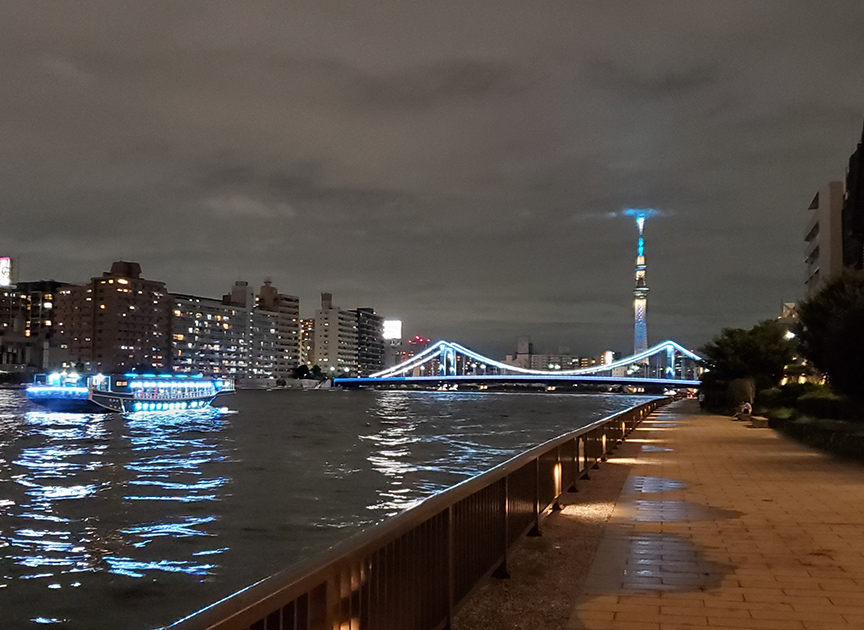
Photo credit by Koto City Tourism Association
A promenade developed along both banks of the Sumida River flowing through central Tokyo. Stretching about 28km, it links historic and atmospheric spots such as Asakusa, Ryogoku, Tsukiji, and Chuo-hashi Bridge.
Along the river are lush green areas such Sumida Park and Hamacho Park, with benches and plazas for visitors to take a break during their walk. In spring, the Somei Yoshino cherry trees in Sumida Park bloom in full glory, their reflections on the river offering a beautiful sight. Throughout the year, the area also hosts a variety of events, including the Sumida River Fireworks Festival and boating.
-
Location
from 1-chome Shin-Ohashi, to 1-chome Ecchujima, Koto City, Tokyo
-
URL
② The site of Saitoan
At the retreat where his journey began, remembering Basho as he was loved by his disciples

Photo credit by Koto City Tourism Association
Saitoan was the retreat of Sugiyama Sanpu, one of Basho’s ten great disciples, who spared no effort in providing financial support. In 1689 (Genroku 2), Matsuo Basho set out from here on his journey along The Narrow Road to the Deep North. A statue of Basho in travel attire now stands by Umibe Bridge. Along the riverside path between Umibe and Kiyosumi Bridges on the Sendaibori River, the Basho Haiku Path displays signboards with his travel route and representative verses from The Narrow Road to the Deep North.
-
Address
1-11 Fukagawa, Koto City, Tokyo(Umibebashi Kyodaichi)
-
URL
Yamagata
③ Akakura Onsen
Riverside springs warmly welcome travelers taking on the difficult pass

Source: Akakura Onsen Tourism Association
Source: Akakura Onsen Tourism Association
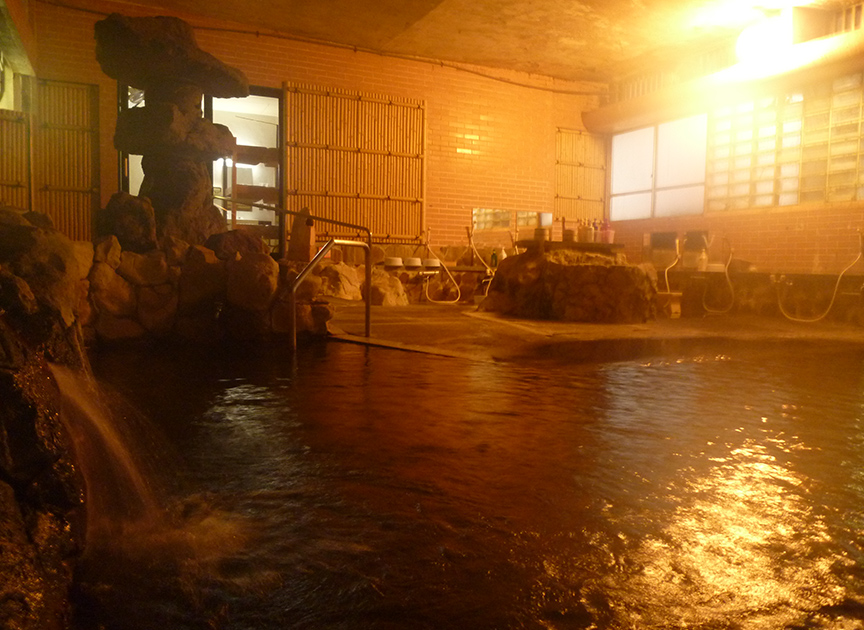
Akakura Onsen stretches along both banks of the clear Mogami Oguni River. About ten inns line the river, each with its own natural hot spring source! With abundant spring water, guests can enjoy fresh, free-flowing baths. Close to Akakura Onsen Ski Area, it also draws many visitors in winter who come to enjoy both the onsen and winter sports together.
-
Address
817-1 Tomisawa, Mogami Town, Yamagata Prefecture
-
URL
④ Yamadera Basho Memorial Museum
A cultural hub perfect for adult travel, balancing sightseeing with learning

Source: Yamadera Basho Memorial Museum
Source: Yamadera Basho Memorial Museum
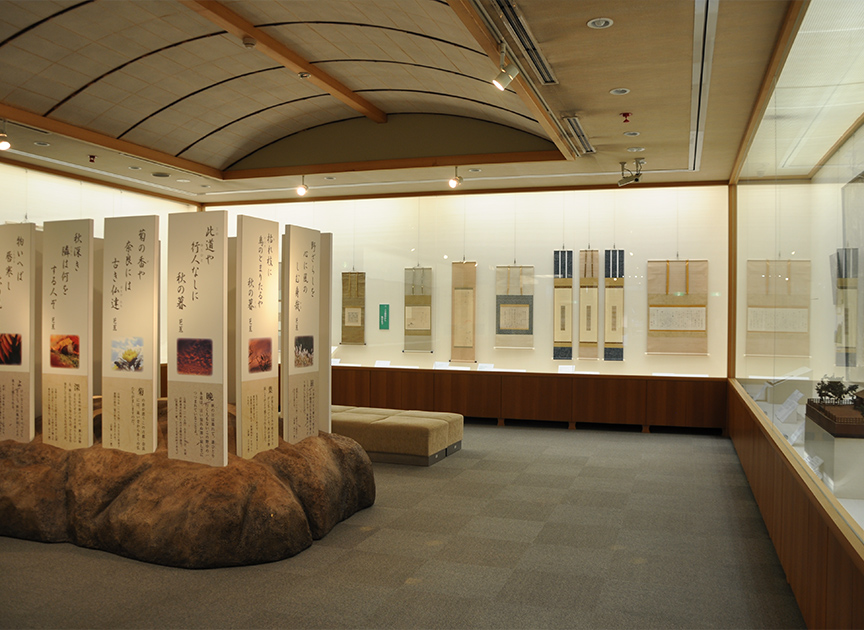
Perched on a hill in Yamadera, Yamagata, the Yamadera Basho Memorial Museum displays Basho’s handwritten letters and haiku, valuable calligraphy and paintings by his disciples, maps tracing his travels, and materials of the origin of haiku from the Edo period. Video exhibits provide an easy-to-understand introduction to the life of the haiku master and the world of The Narrow Road to the Deep North. From the museum’s courtyard, visitors can enjoy views of Risshaku-ji Temple’s Godaido Hall, unusual rock formations, and seasonal landscapes—recognized as one of Yamagata’s Top 100 Scenic Viewpoints.
-
Address
4223 Nanin, Yamadera, Yamagata City, Yamagata Prefecture
-
URL
⑤ The place where Basho started his journey
The starting point of the Mogami River boat ride, along one of Japan’s three fastest rapids
Source: Shinjo Digital Archive
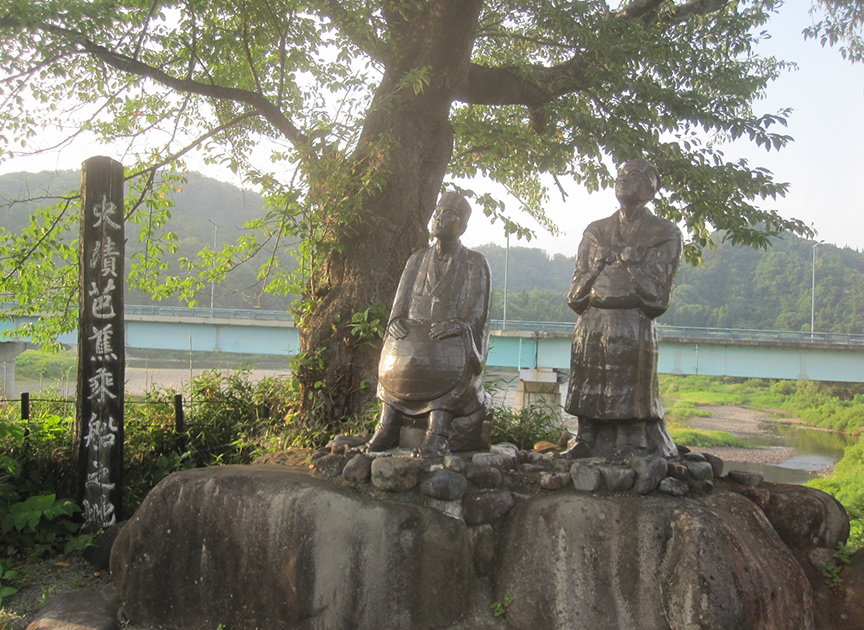
Motoaikai, Shinjo, Yamagata. In 1689 (Genroku 2), Matsuo Basho and Sora began their journey along the Mogami River from here. Today, on the bank where the Mogami and Nitta Rivers meet, stand statues of Basho and Sora made by Shinjo Higashiyama ware, along with a monument engraved with the verse “gathering the early summer rains—swift flows the Mogami River,” visible beyond the trees. On the right bank of the Mogami River stands the medieval site of Yamuki Castle, where white cliffs reflect against the grand current for a truly spectacular view. On the opposite bank is Yamuki Shrine, said to be watching over the safety of boatmen since long ago.
-
Location
Motoaikai, Shinjo City, Yamagata Prefecture
-
URL
⑥ Mt. Haguro
A sacred approach, filled with divine presence, unchanged since Basho’s time
Source: Stay Yamagata
Source: Stay Yamagata
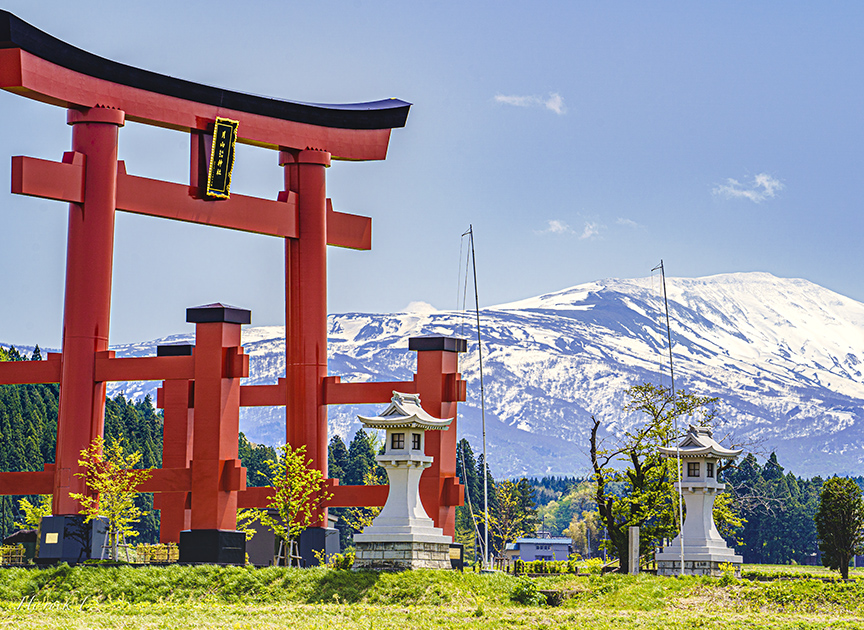
The main approach to Mt. Haguro (one of the Three Mountains of Dewa), known as the Haguroyamasando, has long been a spiritual route walked by ascetics and pilgrims. In 1689 (Genroku 2), Matsuo Basho climbed this path with his disciple Sora. The verse he composed at that time, “coolness, a dim crescent moon over Mt. Haguro,” captures the clear air of summer in the mountains and the quiet stillness of the sacred grounds faintly illuminated by moonlight.
Source: Stay Yamagata
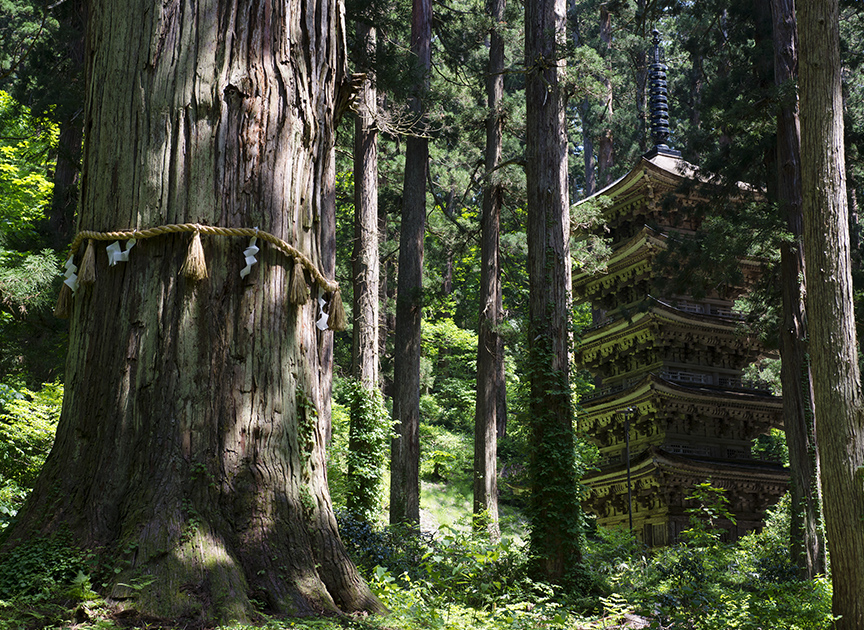
Stepping through the Zuishinmon Gate, and walking along the approach, visitors will encounter many highlights, including the National Treasure five-storied pagoda and the Ninosaka Chaya teahouse. This path, where nature, faith, and literature come together, is truly a place where the spirit of The Narrow Road to the Deep North lives on.
-
Address
Dewa Sanzan Shrine, 7 Touge, Haguro-machi, Tsuruoka City, Yamagata Prefecture
-
URL
⑦ Hiyoriyama Park
A hilltop park with sweeping views of the port town of Sakata, tracing the footsteps of Basho and other literary figures
Source: Stay Yamagata
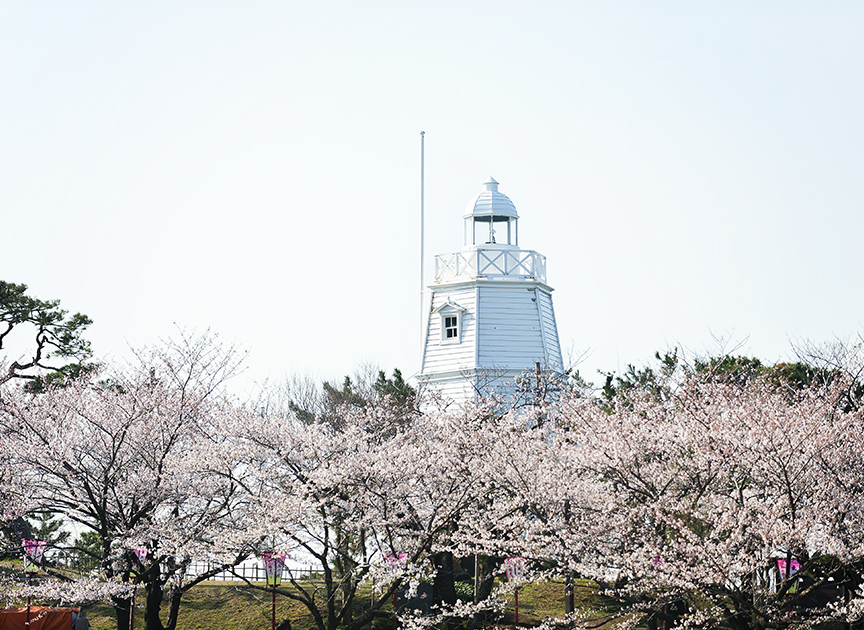
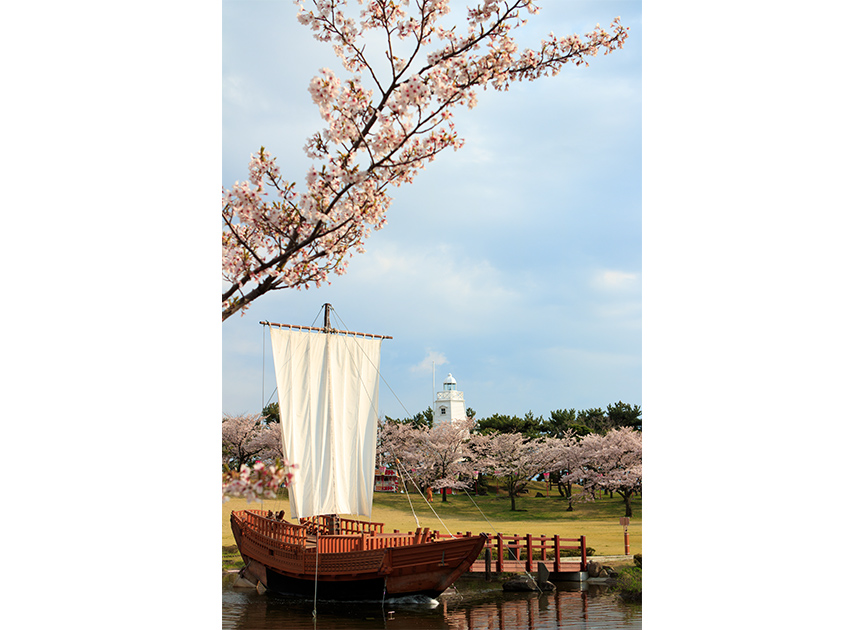
Hiyoriyama Park spreads across a small hill overlooking the Sea of Japan, Sakata Port, the mouth of the Mogami River, and the Three Mountains of Dewa. Throughout the park are historical monuments unique to the area, with a path offering a little journey through nature and history.
Source: Stay Yamagata
In 1689 (Genroku 2), Basho landed in Sakata, where he is said to have composed poetry and mingled with the locals. At sunset, the view of the sun sinking into the Sea of Japan beyond the hexagonal lighthouse creates a spectacular scene—an unforgettable sight even today.
-
Address
1-10 Minami Shinmachi, Sakata City, Yamagata Prefecture
-
URL
⑧ Juroku-rakan Iwa (Rakan statues carved on rocks)
Scenery once seen by Basho, with prayers of safety for fishermen
Source: Stay Yamagata
Source: Stay Yamagata
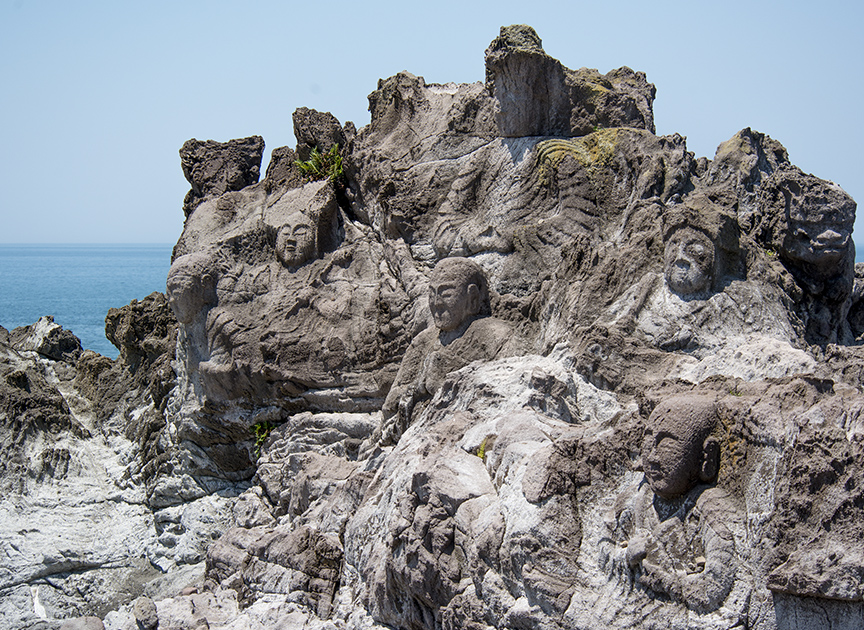
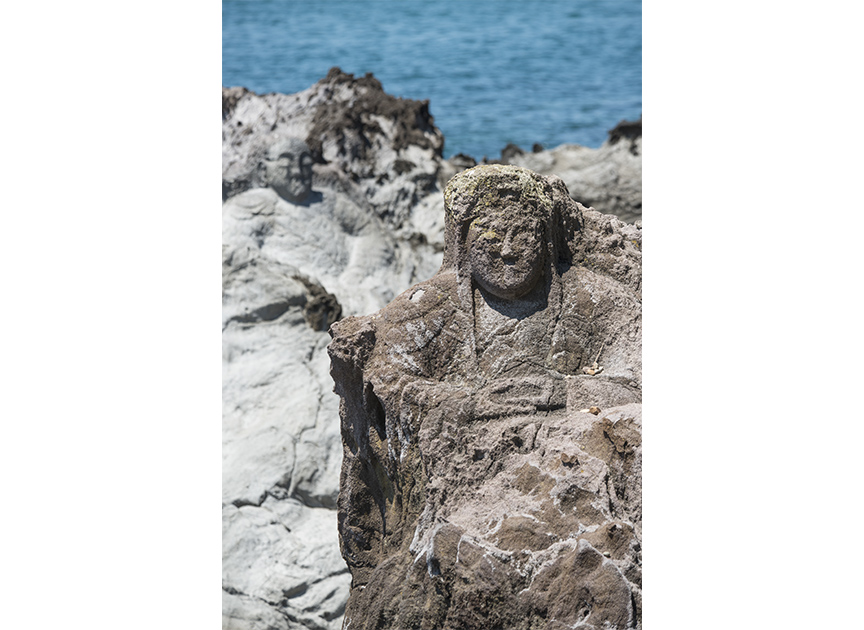
Carved into the seaside cliffs facing the Sea of Japan are 22 Buddhist reliefs. They were created to honor fishermen who lost their lives at sea and to pray for safety on the waters, making this a breathtaking site born of deep devotion. Though built after Basho’s time, the lookout features a monument inscribed with his verse, “a cool evening, over Atsumiyama and Fukura,” showing how this landscape caught his attention.
Nearby are the “married rocks” known as Dewa Futami. At sunset, the sight of the sun passing between the two rocks bound by a sacred rope is considered a sign of good fortune and is cherished by locals.
-
Location
Nishidate, Fukura, Yuza Town, Yamagata Prefecture
-
URL