Story-1
Life in Edo Through Ukiyo-e
Vibrant Exchange Between the Capital and the Countryside
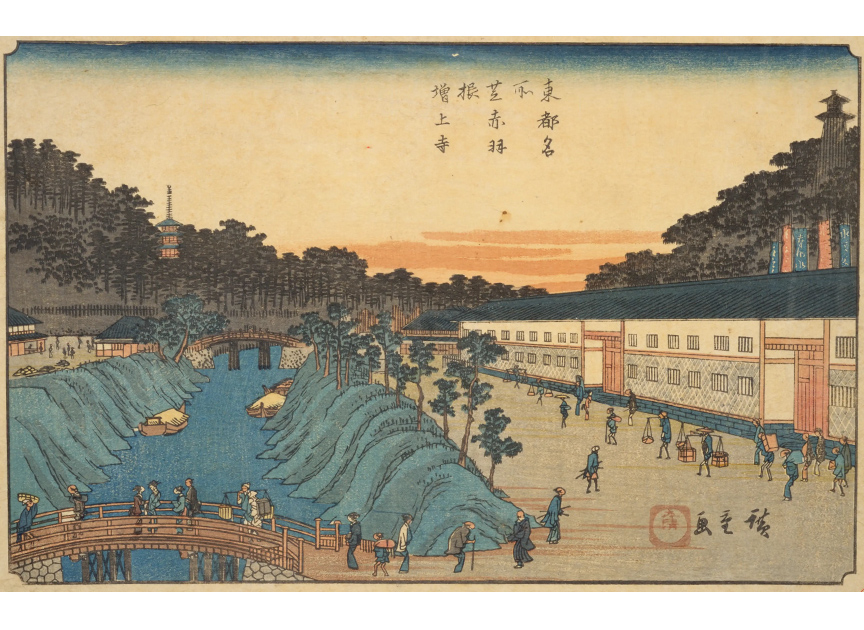
Source: Hiroshige. Famous Places in the Eastern Capital: Akabane Bridge and Zojo-ji Temple in Shiba. National Diet Library Digital Collection
Today, ukiyo-e is undergoing a resurgence and has become nothing short of an international sensation! The works of masters such as Katsushika Hokusai and Utagawa Hiroshige are highly valued among overseas museums and auctions, bringing renewed recognition of their worth as part of Japan’s cultural heritage. Artists like Ito Jakuchu, known for blending realism and fantasy, and Utagawa Kuniyoshi, rich in humor and satire, are also popular in subcultural contexts.
With recent advances in digital technology, collaborations with anime, fashion, and contemporary art have attracted new fans, making ukiyo-e not a relic of the past, but a current presence.
Among them, Utagawa Hiroshige created especially lyrical landscapes through bold compositions and the use of perspective. In the late Edo period, he had a friendship with the Oda clan of the Tendo domain (present-day Tendo, Yamagata), far from Edo. This connection produced as many as 200 to 300 hand-painted works, now known as Tendo Hiroshige. The relationship between Hiroshige and Tendo vividly illustrates the cultural exchange in which the culture of the people of Edo spread among the feudal lords and provinces.
Touring Ukiyo-e Spots in Tokyo and Yamagata
Tokyo
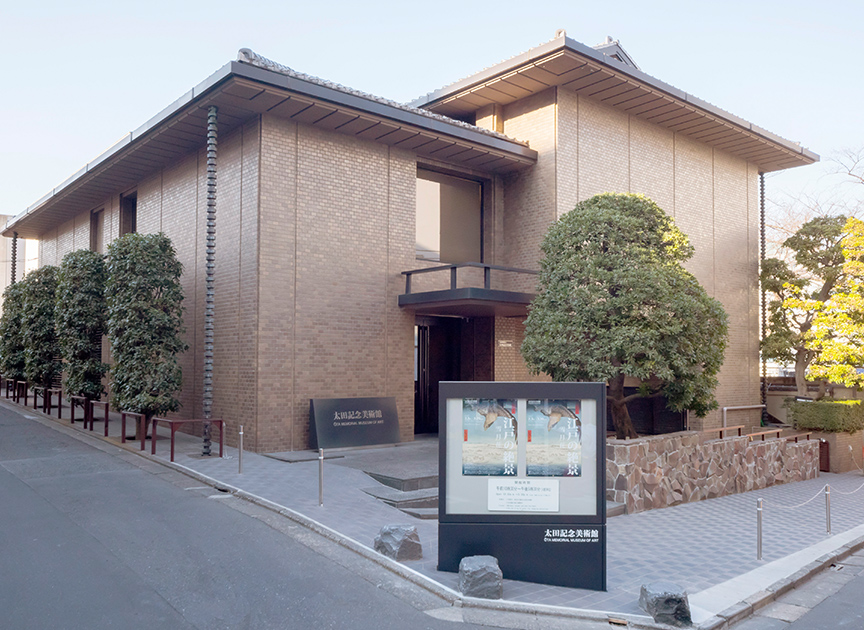
① Ota Memorial Museum of Art (Shibuya City)
A calm exhibition space with careful curation, offering a rare place to quietly engage with masterpieces
Source: Ota Memorial Museum of Art

Source: Ota Memorial Museum of Art
With a collection of about 15,000 works, this ukiyo-e museum spans from the Edo period through the Meiji and Taisho eras.
The Ota Memorial Museum of Art’s defining feature is that it has no permanent display; all exhibitions are rotating special shows. Each exhibition focuses on a theme from a unique angle to present the appeal of ukiyo-e from various perspectives. Exhibit information is also available in English, with consideration for visitors from overseas. Related events, such as lectures and workshops, are also held from time to time.
-
Address
1-10-10 Jingumae, Shibuya City, Tokyo
-
URL
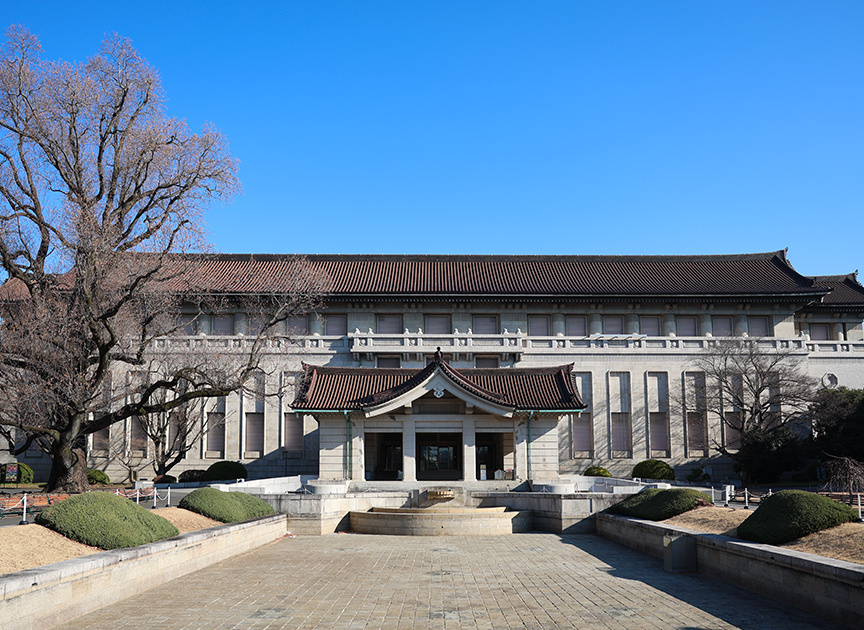
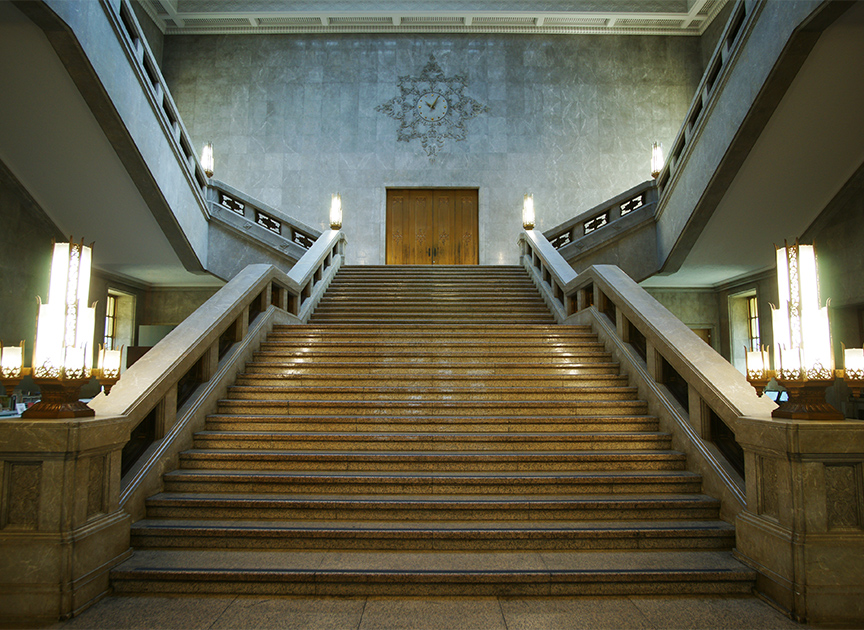
② Tokyo National Museum (Taito City)
Japan’s largest museum for systematic study and appreciation of ukiyo-e
Source: Tokyo National Museum
Source: Tokyo National Museum
The collection spans from woodblock prints to hand-painted works, covering representative masterpieces by artists such as Katsushika Hokusai, Kitagawa Utamaro, Utagawa Hiroshige, Toshusai Sharaku, and Utagawa Kuniyoshi. Famous series, such as Hokusai’s Thirty-Six Views of Mount Fuji and Hiroshige’s Fifty-Three Stations of the Tokaido, continue to draw wide attention both within Japan and from abroad.

Source: Tokyo National Museum
Special exhibitions and Tokyo National Museum collection exhibitions also offer opportunities to see national treasure–class works all together, with past special exhibitions, such as the Sharaku Exhibition and the Hokusai Exhibition, receiving high acclaim! At the museum shop, visitors will also find a wide variety of items such as ornaments, stationery, fashion products, and other wares inspired by ukiyo-e, featured works, and related books—bringing the beauty of art into everyday life.
-
Address
13-9 Ueno Park, Taito City, Tokyo
-
URL
③ The Sumida Hokusai Museum (Sumida City)
Exploring the art and life of Katsushika Hokusai
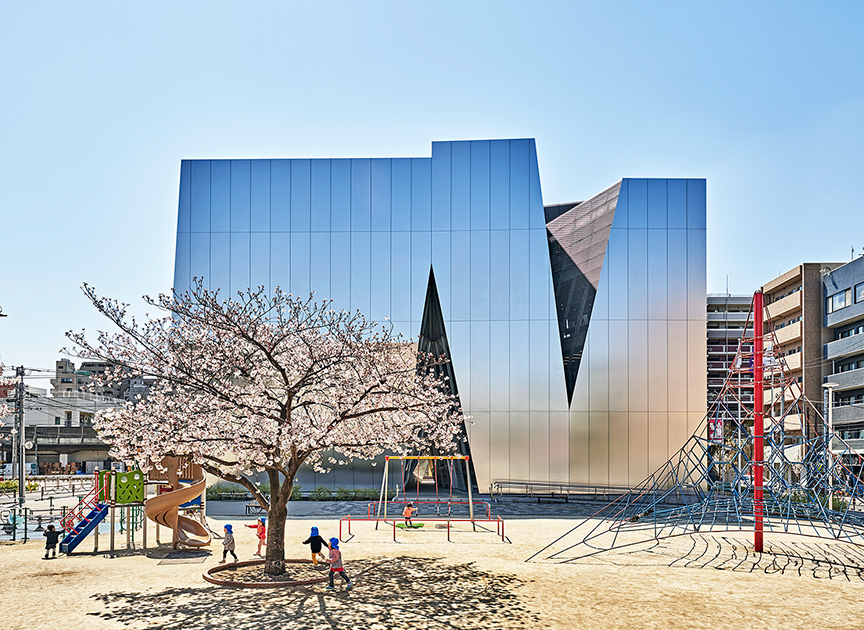
Photos Owashi Yosuke
One of the most representative ukiyo-e artists of the Edo period, Katsushika Hokusai, was born in the area where the Sumida Hokusai Museum now stands, a place he spent most of his roughly 90-year life.

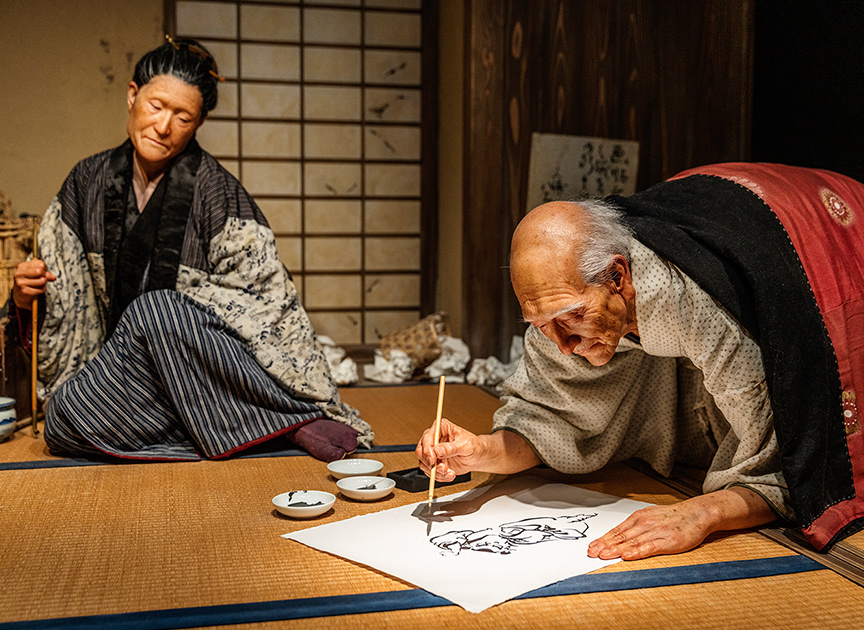
Source: The Sumida Hokusai Museum. Model of Hokusai’s Art Studio from Education Room-Discover Hokusai
The museum’s collection, including the Peter Morse Collection and the Narazaki Muneshige Collection, consists of about 2,200 works (as of April 2024), ranging from prints and hand-painted works, to sketches and materials from his pupils. Alongside his masterpieces such as Thirty-Six Views of Mount Fuji, it also features experimental works and sketches that are less widely known, offering a multifaceted view of Hokusai’s creative breadth.
-
Address
2-7-2 Kamezawa, Sumida City, Tokyo
-
URL
④ The Stage of Ukiyo-e (Kyobashi/ Shin-ohashi/ Eitaibashi/ Nihonbashi/ Yushima Tenjin)
Famous Edo landmarks loved and depicted by many ukiyo-e artists
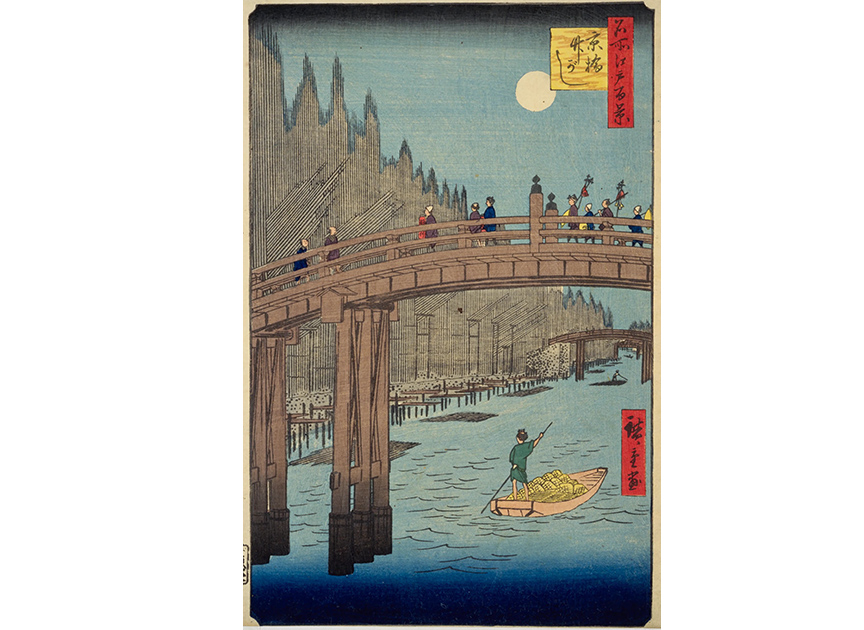
Source: Hiroshige. One Hundred Famous Views of Edo: Kyobashi Takegashi (1857). Eikichi. National Diet Library Digital Collection
Edo’s landmarks were popular motifs repeatedly portrayed by ukiyo-e masters. They were not only beautiful as landscapes, but also carried special meanings and functions that made them favored subjects.
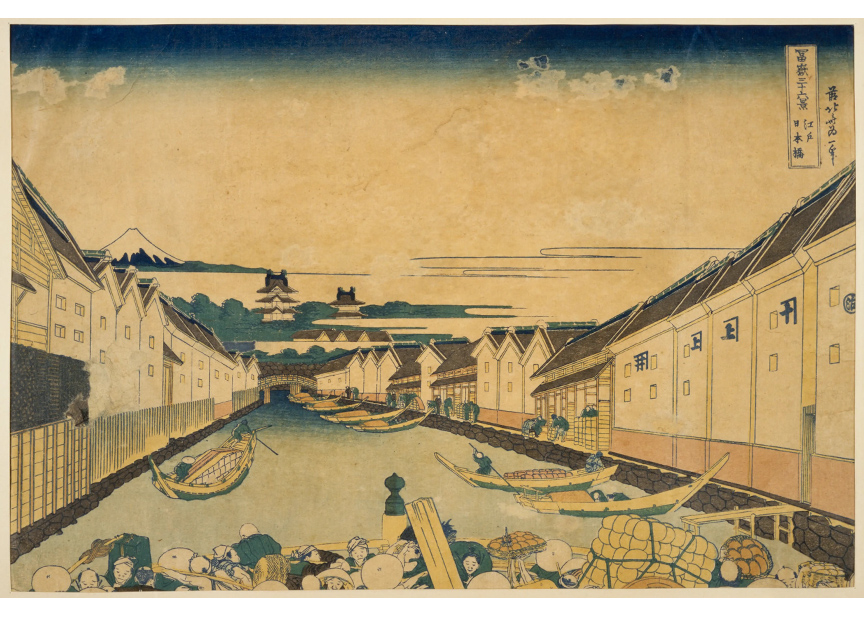
Source: Zenhokusai Iitsu. Thirty-Six Views of Mount Fuji. National Diet Library Digital Collection
Nihonbashi was the starting point of the Five Routes and the heart of Edo. In Thirty-Six Views of Mount Fuji: Nihonbashi Edobashi, Katsushika Hokusai depicts merchants crossing the bridge with Mt. Fuji towering in the background. The work captures both the bustle of the city and the grandeur of nature in a single scene, highlighting the symbolic importance of Nihonbashi.
One Hundred Famous Views of Edo: Kyobashi Takegashi shows Kyobashi Bridge under a full moon and the bamboo market along the Kyobashi River. Hiroshige, who is said to have lived nearby in Tokiwa-cho, used powerful perspective to render the dense lines and depth of the stacked bamboo.

Source: Hiroshige. Famous Places of Edo: Eitaibashi Tsukudajima. Fujikei. National Diet Library Digital Collection
The Eitai Bridge was a key transportation point over the Sumida River, linking Fukagawa and Honjo. In Utagawa Hiroshige’s Eitaibashi Tsukudajima, the angle clearly shows how tall the bridge piers were, built high to allow sailing ships to pass underneath.
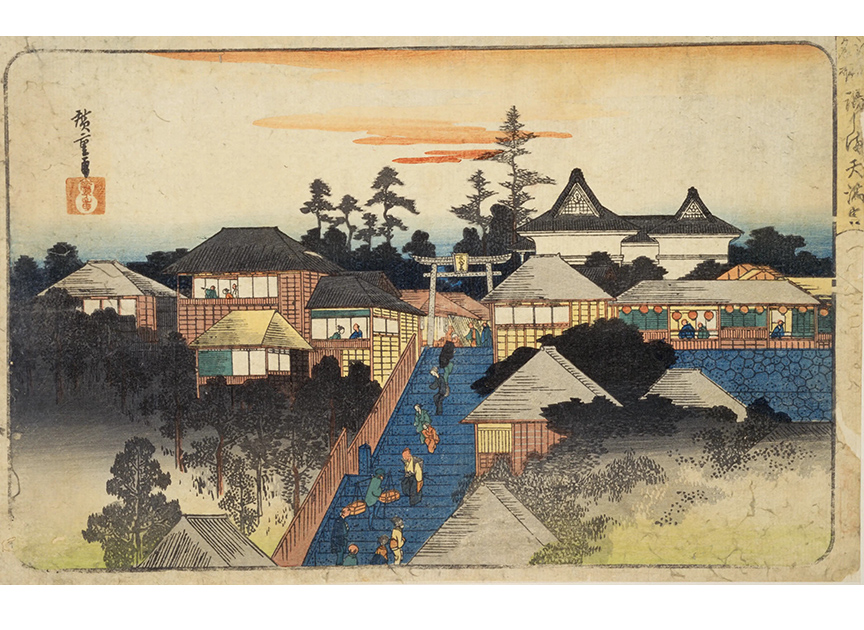
Source: Hiroshige. Famous Places of Edo: Yushima Tenmangu. Kikakudo. National Diet Library Digital Collection
In Famous Places of Edo: Yushima Tenmangu, Hiroshige depicted worshippers visiting Sugawara no Michizane, the deity of learning. Many people surely placed their hopes on the tomikuji lotteries sold there as well.
Through Katsushika Hokusai’s mastery of composition, Kunisada’s refined portrayals of people, and Kuniyoshi’s humor and dramatic layouts, Edo’s bridges and temples/shrines were not just “backgrounds,” but stages that drove the story forward. Ukiyo-e continues to convey the vitality of the city of Edo through such vivid scenery.
Yamagata
⑤ Hiroshige Museum of Art (Tendo City)
Discover Hiroshige’s more personal side, and the blending of Edo and regional culture
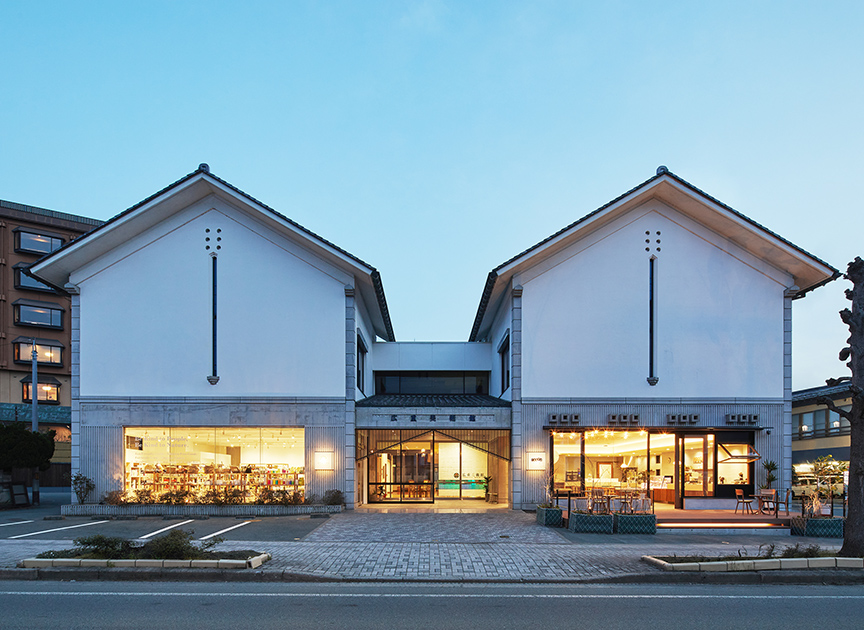
Against the backdrop of ukiyo-e artist Utagawa Hiroshige’s ties with the Tendo domain in the late Edo period, the Hiroshige Museum of Art offers a multifaceted experience of his works. The group of works known as Tendo Hiroshige were commissioned by the Tendo domain, which was struggling financially toward the end of the Edo period, through its retainers and physicians in Edo, and distributed as gifts to the domain’s supporters. These hand-painted works on silk are characterized by their vivid and powerful feel, each piece conveying the energy and breath of Hiroshige’s brush.
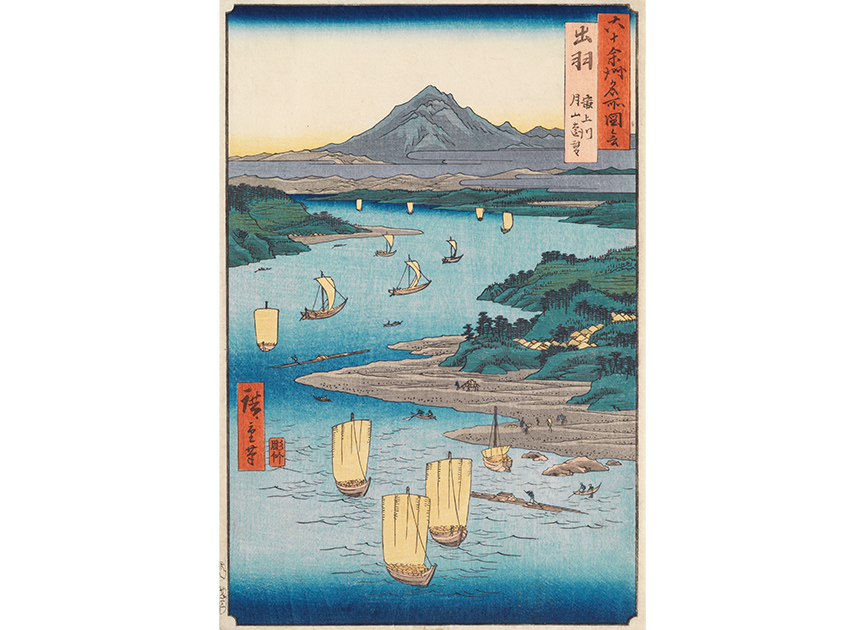
Source: Famous Places in the Sixty-odd Provinces: Mogami River and a Distant View of Mount Gassan. Hiroshige Museum of Art
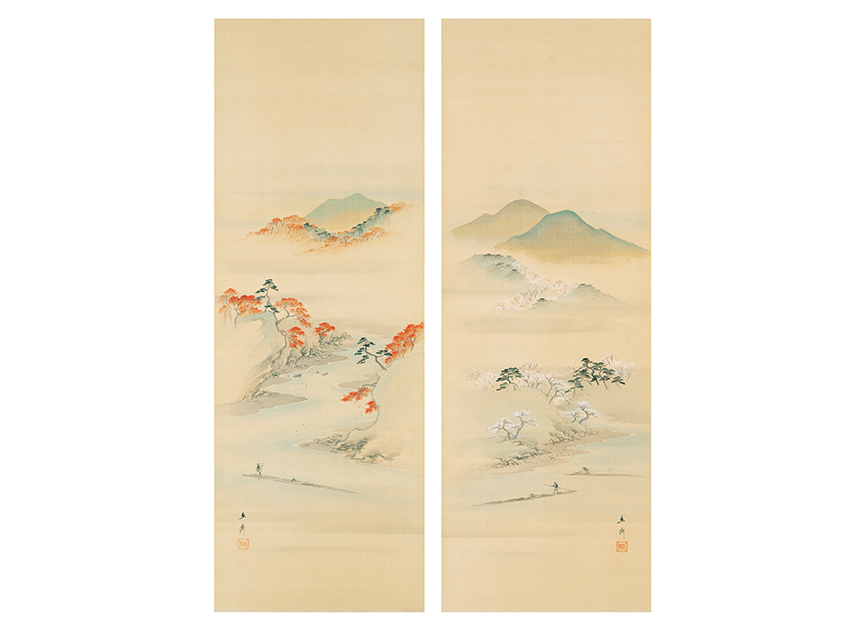
Source: Tendo Hiroshige: Cherry Blossoms at Yoshino, Autumn Foliage at Tatsuta River. Hiroshige Museum of Art
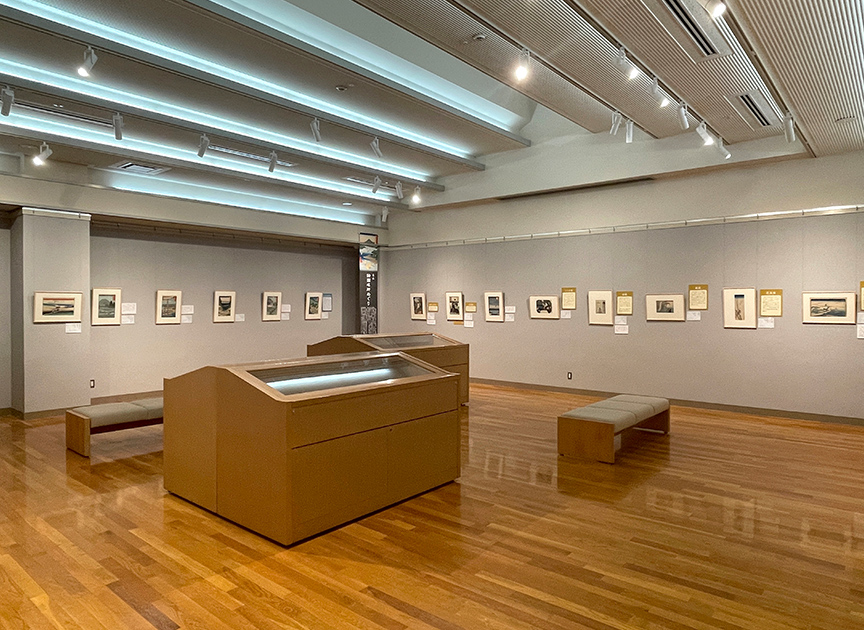
The collection also includes ukiyo-e by the first through fifth generations of Hiroshige as well as other artists active in the same era. To preserve the works, the museum rotates its exhibits monthly and holds special exhibitions on various themes. Tendo Hiroshige is shown only once a year, so be sure to check the exhibition schedule. In 2024, part of the first floor was renovated, adding a cafe and shop where visitors can enjoy hospitality unique to Tendo, a noted sightseeing destination.
-
Address
1-2-1 Kamata Honcho, Tendo City, Yamagata Prefecture
-
URL